
Community
Mega Millions and Powerball jackpots reach a combined $1.275 billion
By Marcus Chen
Advertisement · Why this ad?
Katherine oversees editorial operations across all six brands. Before joining The Meridan Group, she spent 14 years at the Minneapolis Star Tribune, where she led the metro desk through its digital transformation. She holds a Master's in Journalism from Northwestern's Medill School.
More from Katherine →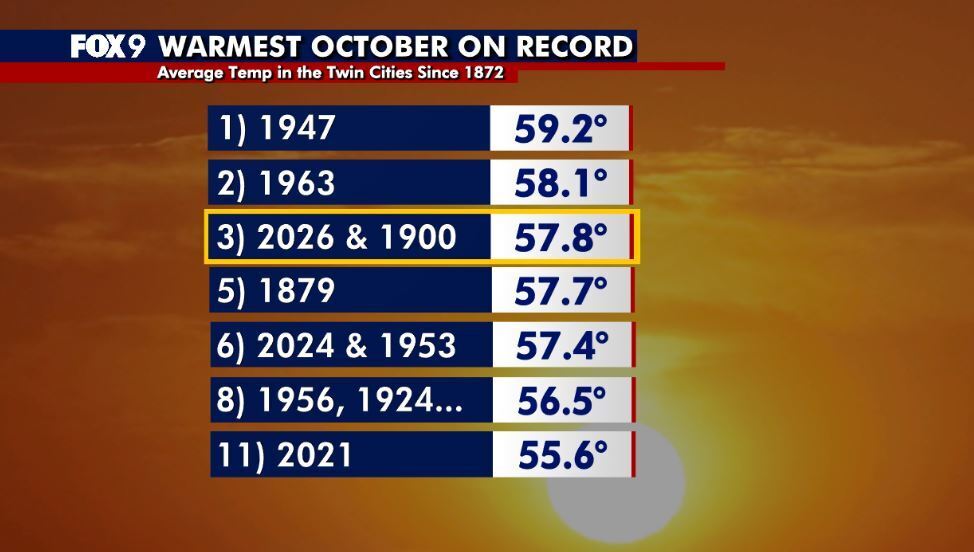
On an unusually warm October morning in Minneapolis, residents awoke to a balmy 70 degrees, a stark contrast to the crisp autumn air typically expected this time of year. Families strolled through local parks, children played outside in short sleeves, and the vibrant hues of fall foliage seemed to glow even brighter under the warm sun. This scene encapsulates a remarkable shift in seasonal expectations, as the Twin Cities recently experienced a record-breaking October.
October 2026 will be remembered in the Twin Cities for its extraordinary warmth, tying for the third-warmest October on record since records began in 1872. The average temperature for the month reached 57.8 degrees, a significant leap from the typical October averages that residents have come to expect. This year, the Twin Cities hit 90 degrees on two consecutive days, marking the first time this phenomenon has occurred in October. Additionally, there was no official freeze recorded throughout the month, a rarity that only a handful of years have achieved.
The historical context of this weather event is striking. October 2026 ties with October 1900 for the third position in the warmest October rankings, with the warmest recorded October being in 1947, which had an average temperature of 59.2 degrees. Such statistics provide a sobering reminder of the changing climate patterns that are increasingly becoming part of life in Minnesota.
The warm October of 2026 is not an isolated incident; it reflects a broader trend of rising temperatures in the region. In fact, recent years have shown a significant uptick in warmer October days, with 2024 and 2021 also making the list of the warmest Octobers on record. This trend has led many residents to adjust their perceptions of seasonal norms, as they experience increasingly warmer weather during months traditionally characterized by cooler temperatures.
For longtime Minnesotans, the warmth of October may feel both familiar and disconcerting. As climate change continues to influence weather patterns, the implications for local ecosystems, agriculture, and daily life are profound. The absence of an official freeze in October means that certain crops may continue to thrive longer than usual, but it also raises concerns about the long-term effects on local wildlife and the natural rhythm of the seasons.
The community's reaction to the warm October has been mixed. Many families have embraced the extended warmth, taking advantage of the pleasant weather to engage in outdoor activities. Local parks have seen increased foot traffic as residents flock to enjoy the sunshine and the vibrant colors of fall. However, there are also voices of concern regarding the long-term implications of such warmth.
Local environmental groups have raised alarms about the potential consequences of these temperature shifts. Organizations like Minnesota Wildlife emphasize the importance of addressing climate change and protecting natural habitats. They encourage community members to consider how their actions contribute to the broader environmental challenges facing the state.
Residents have expressed varying opinions about the warmth. Some, like local mother Sarah Johnson, appreciate the opportunity to extend outdoor family time. “We’ve been able to enjoy the parks and have picnics that we wouldn’t normally have in October,” she noted. Others, however, are concerned about the implications of such warmth on the environment. “It feels nice now, but I worry about what this means for our winters and the wildlife,” said resident Tom Reed, reflecting a sentiment shared by many.
The warmer October temperatures have raised questions about their effects on local ecosystems. The lack of a freeze can disrupt the natural cycles of many plants and animals. For instance, certain species rely on the cold to trigger hibernation or migration patterns. The continued warmth may lead to mismatches in these cycles, potentially affecting food availability and predator-prey relationships.
Moreover, farmers are also feeling the impact. The extended growing season can be beneficial for some crops, but it also poses risks. Farmers like Emily Larson, who runs a family-owned farm in the area, expressed mixed feelings: “While it’s nice to have longer harvest times, I worry about pests and diseases that thrive in warmer conditions. It’s a double-edged sword.”
In addition to the agricultural implications, the warm October has significant consequences for local wildlife. Species such as the American robin and various migratory birds may alter their migration schedules, potentially arriving too early or too late for optimal food availability. Local birdwatchers, like Kevin O’Malley, have noticed changes in bird behavior this year. “I’ve seen robins still foraging around in late October, which is unusual. It makes you wonder how they’re adapting to these warmer temperatures,” he remarked.
As the Twin Cities navigate these changing weather patterns, resources are available for residents seeking to understand and adapt. The Minnesota Department of Employment and Economic Development offers insights into how climate change is affecting local industries, including agriculture. Additionally, community workshops on sustainable practices and environmental stewardship are being organized by local nonprofits, such as Minnesota Environmental Partnership.
Residents are encouraged to participate in local initiatives that promote environmental awareness and sustainable living. By joining community groups or attending local meetings, individuals can contribute to the collective effort to address climate change and its impacts on the Twin Cities.
Looking ahead, the question remains: what does the future hold for October in the Twin Cities? As climate patterns continue to shift, residents may need to adapt their expectations and behaviors. The warmth experienced in October 2026 may become a new normal, prompting discussions about how to prepare for and respond to these changes.
Local leaders are emphasizing the importance of community engagement in addressing climate issues. Initiatives aimed at reducing carbon footprints, promoting renewable energy, and enhancing community resilience are crucial as the region navigates its future. As families gather around dinner tables to discuss the implications of these changes, the values of strong marriages and intact families become even more vital, as communities come together to support one another through uncertain times.
Ultimately, the warm October of 2026 serves as both a celebration of the beautiful fall days and a call to action for residents of the Twin Cities. It is a reminder that while we enjoy the present, we must also consider the future of our environment and the legacy we leave for generations to come. The community's response to these changes will not only shape the immediate environment but will also impact the social fabric of the Twin Cities as residents work together to adapt to an evolving climate.
By Marcus Chen

By Marcus Chen

By Marcus Chen

By Katherine Langford